




and 100s more


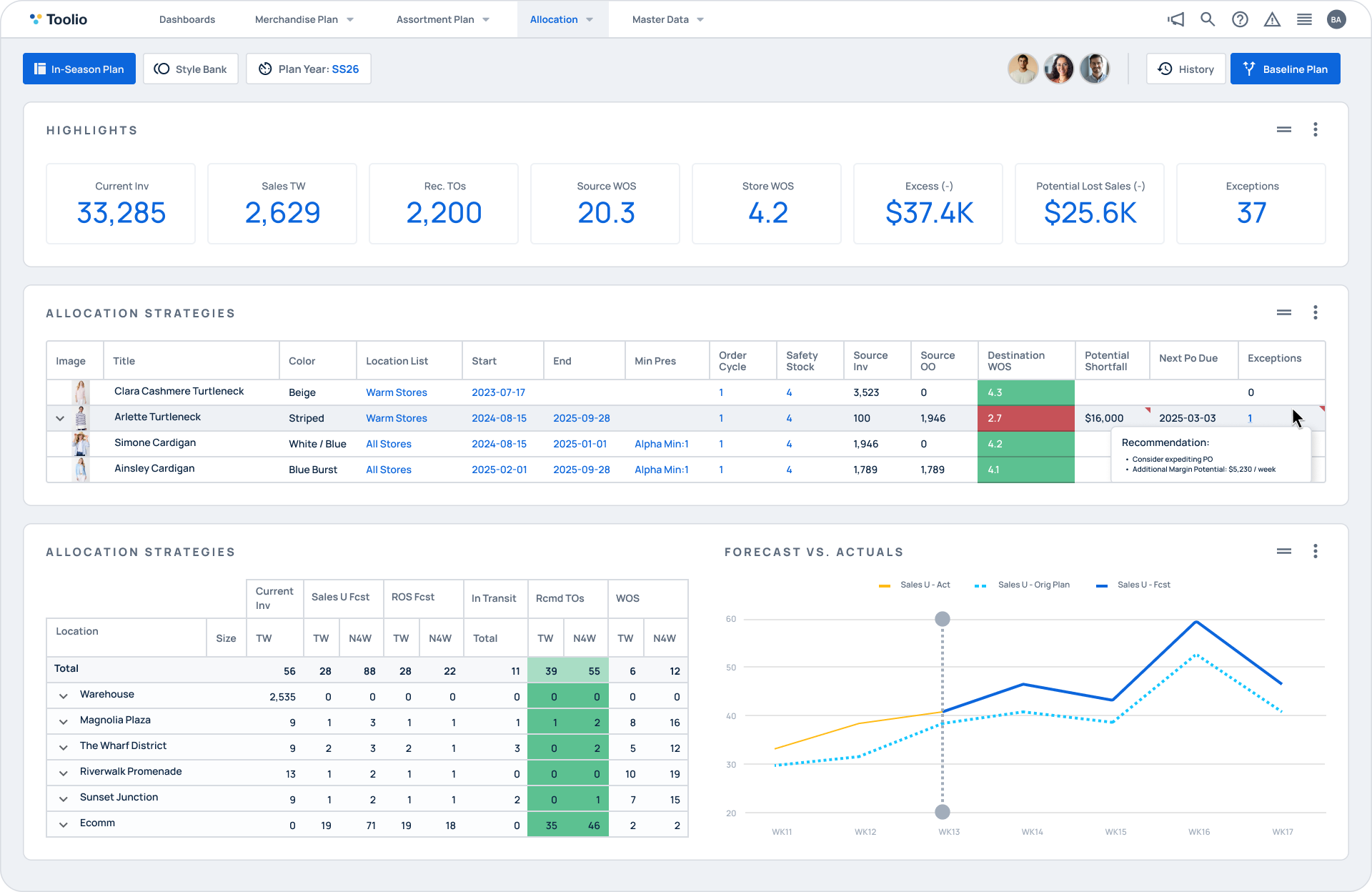
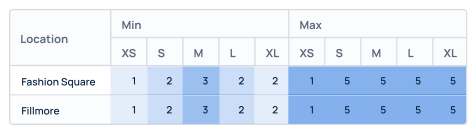
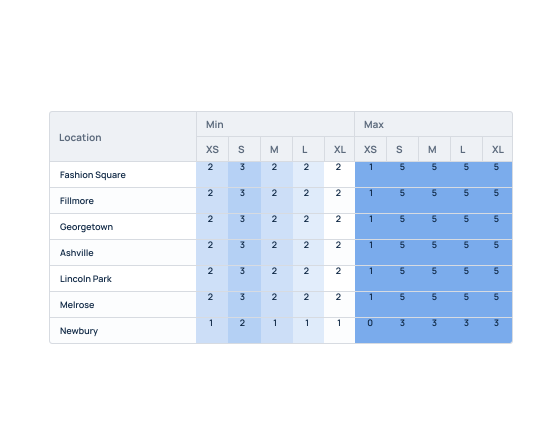
Set minimum and maximum thresholds by store and SKU automatically. Prevent stockouts and overages across the fleet without anyone checking each location.
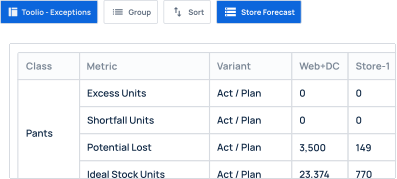
Flag only the stores, SKUs, and weeks that breach a limit. Planners act on the exceptions early instead of combing through allocations that are already on track.
Customize constraints by store type, cluster, or department and apply them across stores. Flexible enough for today, structured enough to grow into.
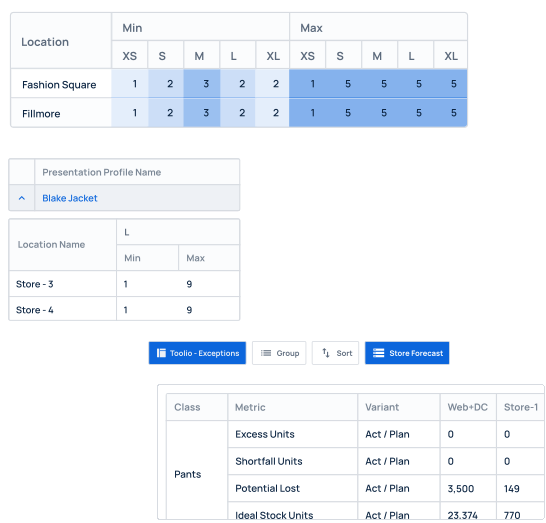
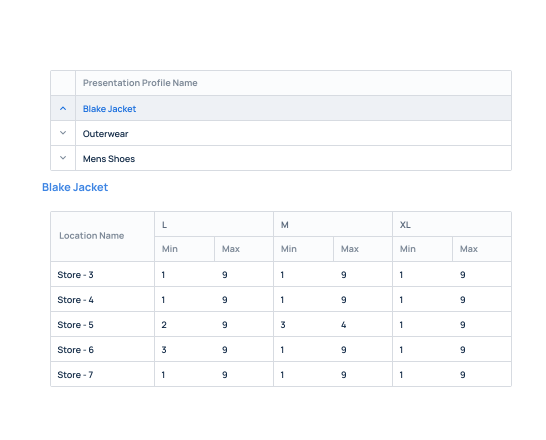
Set and enforce min/max inventory levels by store and SKU to protect floor presentation and control stock flow, the guardrails every allocation runs against.
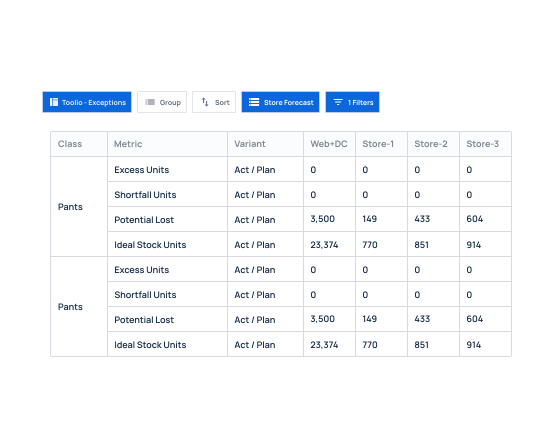
Manage by exception in Allocation Plan using metrics like Excess, Shortfall, and Potential Lost Sales, so allocator time goes to the problem choices, doors, and weeks instead of every strategy.
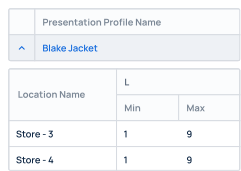
Add custom location attributes and import presentation data in bulk to set and update constraints across a large store network in one pass. No store-by-store entry.

Knix, a trailblazer in the intimate apparel industry, renowned for its commitment to inclusivity and innovation, has transformed its inventory management with Toolio.

Brittany Watts
Allocation Analyst
"Overall, I have been very satisfied with Toolio. It has allowed me to make data-driven decisions by creating sell-through reports for specific collections, sell-through history, and store-specific sell-throughs."
50%
Time Savings
50%
Stockout Reduction
Improved
Inventory Turnover

AKA Brands, a prominent player in the fashion industry known for its portfolio of successful digital native brands, has revolutionized its inventory management strategy and achieved remarkable results since implementing Toolio's integrated inventory management solution.

Stacey Shriefer
Vice President Inventory Planning
“Toolio was instrumental in showing our merchants that they could have 50-75% less SKU count and do the same amount of sales. We expect $5M in cost savings and efficiency gains.”
50-75%
SKU count reduction
$5M
expected cost savings and efficiency gains
5-10
weeks of stock reduction

Weezie Towels, celebrated for its artisanal approach to crafting luxurious, personalized towels, has elevated its inventory management to new heights with Toolio.

Holly Leach
Vice President of Merchandising & Business Development
"After seeing the demo for Toolio, I immediately recognized the bandwidth this system generates. It is extremely intuitive and solves for many of the manual analyses our team was running on a regular basis."
40%
efficiency gains
4%
inventory cost reduction
8x
Return on Investment
Explore More Use Cases

Teams
Allocation Teams
Plan with greater precision, adapt to market shifts instantly, and maximize profitability through advanced retail planning capabilities.

Use Cases
Replenishment management
Automate replenishment with an adaptive engine that reacts to sales, seasonality, and promotions in real time.
Use Cases
Initial Allocation & Product Launches
Plan and execute product launches with smart allocation strategies that balance demand, timing, and store needs.
No — the constraints are guardrails, not autopilot. You set min/max by store and SKU to prevent the obvious errors (a stockout at a top door, an overage at a slow one), and Toolio flags exceptions for a planner to judge rather than forcing a bad placement. You keep control; the rules just stop the mistakes that would otherwise slip through at scale.
Because manual review doesn't scale — across hundreds of stores and thousands of SKUs, the problems hide in the volume. Toolio surfaces only the breaches that matter (Excess, Shortfall, Potential Lost Sales), so instead of scanning every allocation you go straight to the stores and weeks that are off — catching issues earlier with a fraction of the effort.
Allocation decides how inventory is placed across stores. This use case is the control layer on top of it: the min/max constraints every allocation must respect and the exception views that catch when one doesn't. Teams allocate in Toolio and use constraint-and-exception management to keep every allocation inside the business rules automatically.
It isn't done one cell at a time. You define constraints by store type, cluster, or department and apply them in bulk with custom attributes and imports, so a whole network is configured in one pass. Presentation profiles let you reuse those rules season to season instead of rebuilding them.
Yes — that's the point of managing by exception. Toolio applies your constraints across the full store-and-SKU grid and only surfaces the breaches, so the workload stays flat as you add stores. It's the same platform enterprise retailers like Knix run, where smarter allocation and exception control cut stockouts by 50%.
Absolutely. Toolio supports large data volumes, complex hierarchies, and multi-level planning, making it ideal for enterprise retail planning and analysis.
See Toolio In Action
The best way to understand what Toolio could do for your team is to start a conversation.